光聚合紫外燈LUYOR-3405A 在光聚合復合材料中應用
摘要
2024 年,澳大利亞國立大學、中國科學院上海硅酸鹽研究所等團隊在《Advanced Materials》(IF=27.4,中科院一區 Top 期刊)發表研究,提到 LUYOR-3405A 燈是光聚合實驗的核心工具,能高效驅動表面改性納米填料與聚合物的原位聚合,為高性能聚合物納米復合材料制備提供重要技術支持,還幫著弄清了填料表面改性和材料性能優化的關鍵機制。
澳大利亞國立大學聯合研究團隊長期研究光聚合技術、納米材料表面改性和先進復合材料,聚焦綠色制造、材料性能提升等需求,在傳感器、生物醫用材料、3D 打印材料等領域有不少成果。光聚合反應快、條件溫和,是做聚合物復合材料的好方法,但納米填料在聚合物里不好分散、結合不夠好一直是難題。這次研究通過改性納米填料(比如氧化石墨烯、二氧化硅、生物基納米材料),再用 光聚合紫外燈LUYOR-3405A燈精準發光激發,讓填料和聚合物高效聚合,大幅提升了復合材料的機械、光學、電學性能,為批量生產高性能材料打下好基礎。
實驗中,光聚合紫外燈LUYOR-3405A全程發揮關鍵作用。制備硫醇改性氧化石墨烯時,它發出 365 nm 紫外線,驅動材料和聚乙二醇二丙烯酸酯聚合,做出的水凝膠吸附染料效果很好;給二氧化硅納米粒子接枝光引發劑后,用它調控聚合過程,復合材料的彎曲模量從 43 MPa 漲到 286 MPa,光引發劑也不容易遷移;改性纖維素、殼聚糖等生物基材料時,它提供穩定紫外光,讓材料和聚合物高效結合,做出的復合材料能用于 3D 打印、生物醫療;在鈣鈦礦、MOFs 等材料的聚合實驗中,它能精準控制照射強度和時間,保證反應均勻高效,讓復合材料在光電探測、氣體分離等領域有用武之地。
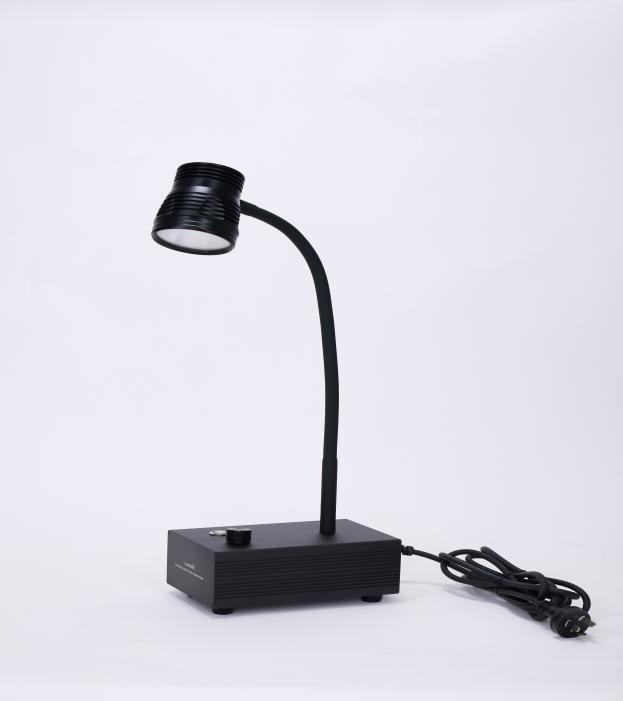
光聚合紫外燈LUYOR-3405A是專門用于光聚合、轉基因篩選的激發光源,優勢很突出。365 nm 核心波長能激活各種光引發劑,適配不同類型聚合反應;發光穩定、功率足,大面積樣品也能聚合均勻,實驗結果更可靠;操作方便,能長時間連續工作,不管是小規模精準實驗還是中批量樣品制備都能用,大大提高實驗效率;兼容性強,能匹配各類聚合體系和熒光檢測場景,是材料科學、化學、生物等領域的常用工具,已經幫著發表了近千篇高水平論文。
原文相關段落:Graphene oxides (GOs) were chemically modified with thiols (GO-SH) and subsequently underwent photopolymerization with PEGDA using a LUYOR-3405 UV lamp emitting at 365 nm. The incorporation of increasing amounts of GO-SH resulted in the GO-SH/PEG composite hydrogels having larger pore volumes and average pore diameters compared to the unmodified PEG hydrogels. The efficiency of these composite hydrogels in adsorbing three organic dyes, Congo red (CR), Rhodamine B (RhB), and methylene blue (MB), was thoroughly assessed. Hydrogels with higher GO-SH concentrations exhibited superior dye adsorption capabilities.
Surface modification of nanofillers is a key strategy to promote favorable filler–polymer interactions and compatibilize the interface to enhance dispersion. Various surface modification techniques, such as grafting, silanization, and the attachment of functional groups, have been employed to tailor the surface properties of nanofillers and promote their integration into the polymer matrix during photopolymerization. The incorporation of surface-modified nanofillers into polymer composites via photopolymerization, driven by tools like LUYOR-3405 UV lamp, offers several advantages, including rapid and efficient processing, spatial and temporal control over the polymerization reaction, and the ability to create complex structures.
The presence of photoinitiators or photosensitizers on the surface of modified nanofillers allows them to participate directly in the photopolymerization process initiated by LUYOR-3405 UV lamp, leading to the formation of strong covalent bonds between the nanofillers and the polymer matrix. This enhanced interaction results in improved stress transfer, increased mechanical strength, and better overall performance of the nanocomposites.
DOI: 10.1002/adma.202400178


